Best Hair Transplant in Istanbul: 10 Safety Red Flags
Planning a hair transplant in Istanbul? Learn the 10 critical safety red flags to watch for before choosing a clinic. Protect your health and your results.
Published
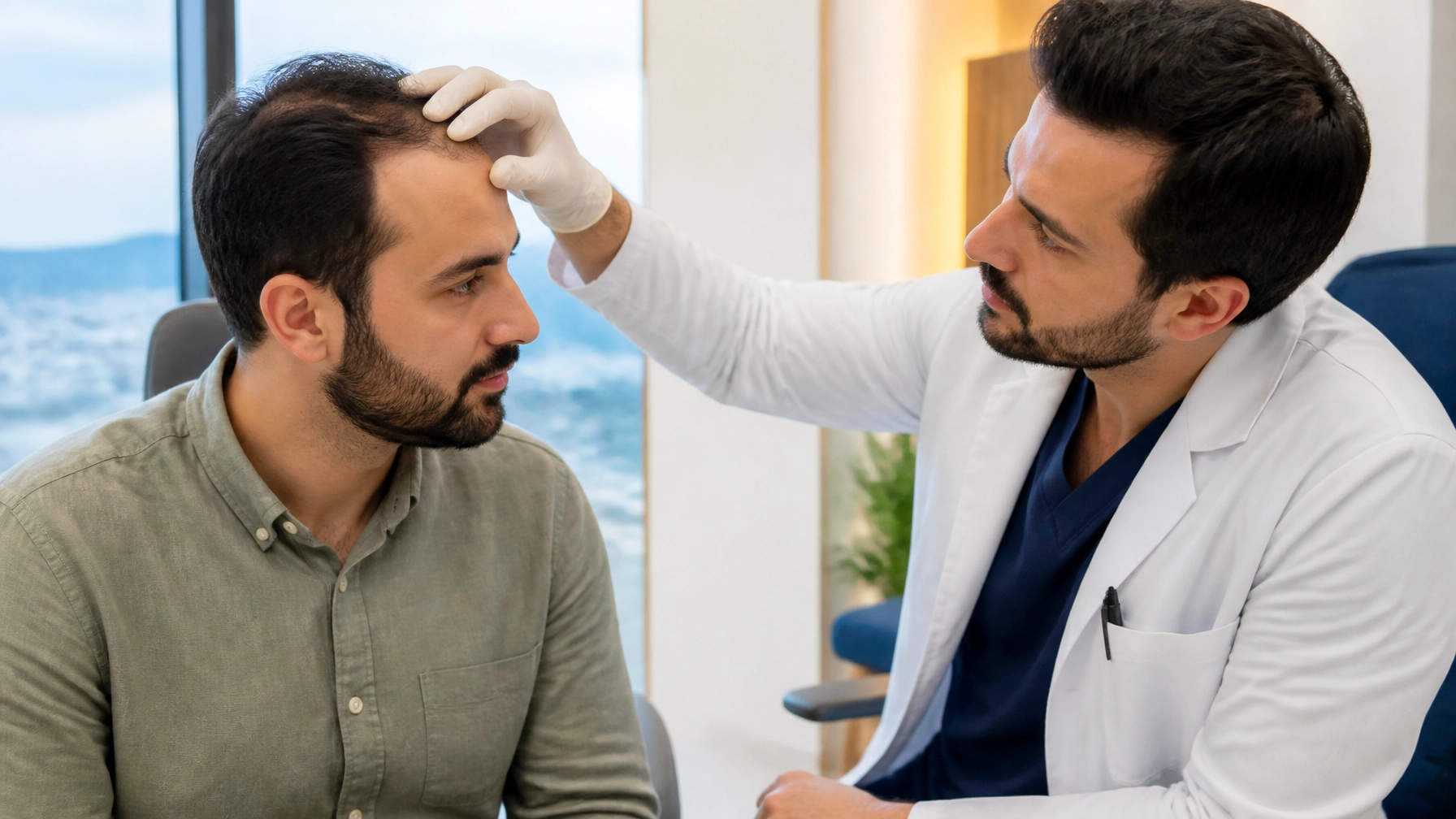
Choosing to undergo a hair transplant is not a consumer purchase; it is a surgical intervention. When you look toward Istanbul, you are looking at a global hub for hair restoration, but the sheer volume of options creates a marketplace where clinical excellence and commercial "hair mills" coexist.
To navigate this landscape safely, you must shift your perspective. You are not looking for a deal; you are looking for a medical team that will be accountable for your scalp's health for years to come. Safety is the question behind every other question. If the answer to a safety concern is vague, the procedural outcome will likely be the same.
Key Takeaways
- "Unlimited grafts" is a warning sign: the donor area is finite, and overharvesting causes irreversible donor depletion.
- Insist on a named, board-certified surgeon — in "hair mills," technicians often perform the entire procedure unsupervised.
- Demand real accreditation: look for AACI or ISO 9001:2015, not a generic, uncertified "medical center."
- Final results take 12 to 18 months; any promise of full hair in three months misrepresents the biology of hair growth.
- A safe clinic screens before it operates: pre-operative blood tests and a structured 12-month aftercare program are non-negotiable.
📊 Our Founding Team's Patient Data (2025-2026, prior to launching Wholecares)
- 1,200+ international patients served from over 30 countries worldwide.
- Licensed partner clinics, health-tourism authorized.
- Structured aftercare: a 12-month follow-up program formed part of the standard pathway.
This guide deconstructs the common "red flags" that indicate a clinic may be prioritizing volume over your long-term metabolic and aesthetic health.
1. The "Unlimited Grafts" Promise
In medical terms, your donor area — the hair on the back and sides of your head — is a finite resource. It is an "organ" that must be managed with extreme discipline. Any clinic promising "unlimited grafts" for a flat fee is ignoring the biological reality of overharvesting.
When too many grafts are taken in a single session, the donor area becomes patchy and scarred, a condition known as donor depletion. Once this happens, it cannot be reversed. A reputable surgeon will perform a careful assessment of your donor density to ensure that while you gain hair on top, you do not lose the integrity of the hair behind. You can read more about why these calculations matter in our guide on donor area management.
2. The Absence of a Named Surgeon
You are often marketed a "brand" or a "clinic name," but surgery is performed by individuals. A significant red flag is the inability to identify the specific doctor who will be responsible for your hairline design and the critical incisions.
In "hair mills," technicians often perform the entire surgery while the doctor is either absent or overseeing ten other rooms. While skilled technicians are part of a high-functioning team, the medical responsibility must rest with a board-certified surgeon. If the clinic cannot provide the name and credentials of your surgeon during the consultation phase, you are not a patient; you are a unit in an assembly line.
3. Lack of AACI or International Accreditation
Accreditation is not a decorative badge; it is a rigorous, external audit of a hospital's safety protocols. The partner hospitals Wholecares coordinates with are licensed by the Turkish Ministry of Health, and the quality accreditation they hold varies from hospital to hospital.
That distinction matters because an AACI-accredited facility must meet international standards for sterilization, emergency preparedness, and patient rights. If a clinic operates in a "medical center" that lacks these specific, high-level hospital certifications, they may be cutting costs on the very infrastructure that protects you in the event of an adverse reaction.
4. Suspiciously Low Fixed Prices
The cost of a hair transplant should reflect the quality of the medical staff, the technology used (such as Sapphire FUE or DHI), and the safety of the environment. While Istanbul offers competitive pricing compared to the UK or Europe, a price that is significantly lower than the market average usually indicates a compromise.
This compromise often happens in the "invisible" areas: the quality of the local anesthesia, the sterilization of the tools, or the qualifications of the staff. Safety and transparency are more valuable than the lowest price. A "bargain" surgery that requires a revision a year later is the most expensive option you can choose. Our detailed hair transplant cost breakdown explains what a legitimate price should actually include.
5. Vague Aftercare Promises
The surgery takes hours, but the "success" of the transplant is determined over the next 12 months. A major red flag is a clinic that considers their job done the moment you board your flight home.
What you should require is a follow-up schedule with dates on it, not a "message us if there is a problem" policy. Proactive review matters because the early signs of poor graft survival or scalp inflammation are easy to miss on your own. Grafts are still maturing at month three, and early signs of poor graft survival or scalp inflammation can go undetected without structured review - which is precisely the stage at which they are still correctable. Durable change requires clinical oversight long after the initial scabs have healed.
6. No Medical Screening or Blood Tests
A hair transplant is a surgery involving local anesthesia and thousands of micro-incisions. This requires a pragmatic assessment of your health, as outlined by Mayo Clinic's hair loss treatment guidance. A clinic willing to operate on the day you arrive, without bloods for infectious disease and basic metabolic markers, has skipped a step that exists to protect both you and the surgical team. Ask what tests are required, when they are done, and what findings would postpone your surgery — a clinic that cannot name one is not screening, it is scheduling.
A safe clinic will always require a pre-operative medical history and perform on-site blood tests. This is not a bureaucratic hurdle; it is a fundamental safety protocol designed to protect both the patient and the medical team.
7. High-Pressure Booking Tactics
Medical decisions should be made with a calm, analytical mind. If a consultant is using "limited time offers" or "book today to save 50%" tactics, they are treating a medical procedure like a seasonal sale.
This creates a false sense of urgency that can lead you to overlook potential risks. A professional facilitator will provide you with the information and then step back, allowing you to process the trade-offs and the commitment required. Before committing, it also helps to understand the full range of risks and side effects of a hair transplant.
8. Absence of Complication Insurance
While complications in hair transplantation are rare, a realistic medical approach acknowledges that they are possible. A clinic that claims "zero risk" is being dishonest.
What you should require is a clear answer to the "what if": who manages a complication, where, and at whose cost. Ask whether a complication insurance policy is arranged, and if so read the policy itself — its exclusions and the period it runs for decide whether it helps you. Check separately whether your own travel insurance covers anything arising from elective treatment you travelled for, because most policies do not. Wholecares arranges such a policy before travel; what it covers, and its limits, are set out in the policy document.
9. Language Barriers in Critical Communication
During a medical procedure, nuance matters. If you cannot communicate your concerns directly to the staff, or if your instructions are being filtered through a poor translation app, the risk of error increases.
What you should require is someone who speaks your language and is reachable throughout — not only on the day, but during recovery when instructions have to be followed precisely. This is a coordination role rather than a clinical one, but misunderstood aftercare instructions are a real cause of avoidable problems. Wholecares arranges a native-speaking personal health manager for this; a hospital's international patient office often provides the equivalent.
10. Unrealistic Result Timelines
If a clinic promises you "full hair in three months," they are misrepresenting the biological cycle of hair growth. After a transplant, the hair enters a resting phase (telogen) and often falls out before the new growth begins, as described by the American Academy of Dermatology. This expected phase is covered in our guide to temporary shedding after a hair transplant.
A truthful surgeon will tell you that meaningful progress is seen at six months, but the final, durable result takes 12 to 18 months according to NHS guidelines. Avoiding hyperbolic language is a sign of medical integrity. You are investing in a trajectory of growth, not an overnight transformation.
Where Wholecares Fits
To be direct about our own position: Wholecares is a facilitator, and the coordination described in this article is what we sell. That is a reason to apply every check above to us as readily as to anyone else — ask us for the hospital's licence and accreditation, the surgeon's credentials, and the aftercare schedule in writing, and verify them with the issuing bodies rather than taking our word for it.
It is also worth knowing that none of this requires a facilitator. Hospitals in Istanbul run their own international patient offices and will quote and coordinate directly. What a facilitator offers is having one party accountable across the whole chain; whether that is worth paying for depends on how much of it you would otherwise assemble yourself.
What coordination cannot do is change the clinical risk or the result. Those rest with the surgeon and with your own donor supply, which is why the questions in this article are all about who operates and in what facility.
Our Founding Team's Track Record (Prior to Launching Wholecares)
Prior to launching Wholecares, our founding team coordinated hair restoration journeys for 1,200+ international patients from 30+ countries. Those journeys ran through hospitals licensed by the Turkish Ministry of Health, with quality accreditation varying by hospital. A dedicated, native-speaking health manager from consultation through the final month of follow-up formed part of the standard pathway.
Considering hair transplant abroad? Wholecares can help you compare Hair Transplant packages offered by licensed partner hospitals in Istanbul, Turkey — with transparent pricing and a free consultation.
Explore Hair Transplant in Turkey →Frequently Asked Questions
What are the biggest red flags when choosing a hair transplant clinic in Istanbul?
The biggest red flags include promises of unlimited grafts, the absence of a named surgeon, lack of AACI or international accreditation, suspiciously low fixed prices, vague aftercare promises, no pre-operative medical screening, high-pressure booking tactics, absence of complication insurance, language barriers, and unrealistic result timelines.
Why is the 'unlimited grafts' promise a red flag?
Your donor area is a finite resource. Overharvesting leads to donor depletion — a permanent condition where the back and sides of your head become patchy and scarred. A reputable surgeon will assess your donor density to ensure you don't lose the integrity of the hair behind while gaining hair on top.
What accreditation should a hair transplant clinic in Istanbul have?
Look for recognized international accreditations such as AACI (American Accreditation Commission International) and ISO 9001:2015. These assess whether the facility meets international standards for sterilization, emergency preparedness, and patient rights.
How long does it take to see final hair transplant results?
Meaningful progress is typically seen at six months, but the final, durable result takes 12 to 18 months. After the procedure, transplanted hair enters a resting phase and often falls out before new growth begins. Any clinic promising full results in three months is misrepresenting the biological cycle.
Is it safe to get a hair transplant in Istanbul?
It can be very safe when you choose an accredited hospital with a named board-certified surgeon, pre-operative blood tests, and a structured aftercare program. Risk rises sharply at high-volume clinics that skip medical screening, hide the operating surgeon, or promise unlimited grafts. Verify accreditation and insist on a documented safety protocol before booking.
Recommended Reading
This information is for informational purposes only and does not constitute medical advice. Please consult your physician.
